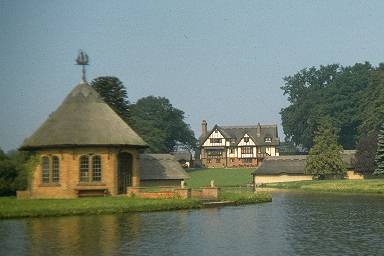
This is Fen country,
flat and rich with history. Parts even below sea level, dikes and drainage pumps
in constant battle with tides and floods. Big, windy skies with armadas of clouds
sailing from horizon to horizon. Tiny villages, each with its ancient church,
yards-thick flinty walls scarred and shifted by the centuries. Thatched roofs,
good pubs and friendly people everywhere. We explored the meandering waterways
of the Norfolk Broads in a 30' cruiser, then rented a house in the quiet cathedral
city of Ely - an ideal base for expeditions into surrounding countryside.
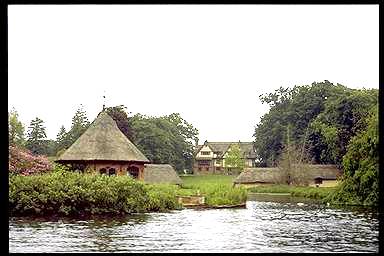
Two slides almost fifty years apart - same scene, same photographer
As a young man this scene caught my eye while sailing down the Bure on the Norfolk
Broads, and again, quite by chance, as a senior when cruising past the same spot
in 1998. I didn't realize it until I got home and looked at my old Kodachromes.
Not much has changed in half a century - can you spot which is which?
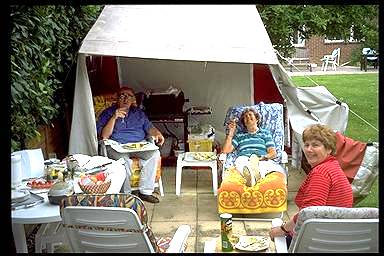 The
perfect way to recover from jet lag. Our good friends Dizzie and Maurice generously
sent a taxi to pick us up from Heathrow and drive straight to their home for a
warm welcome and cool drinks.
The
perfect way to recover from jet lag. Our good friends Dizzie and Maurice generously
sent a taxi to pick us up from Heathrow and drive straight to their home for a
warm welcome and cool drinks. 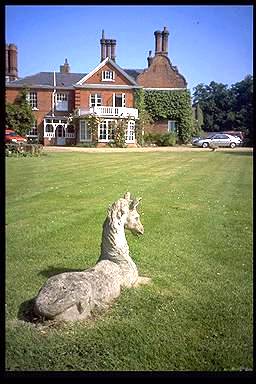 Our
first couple of nights on the Broads were spent tied up by the quiet lawns of
this old hotel at the picturesque village of Coltishall. Fifty years ago I was
flying Mosquito nightfighters out of the RAF station here, and it's still a very
active base.
Our
first couple of nights on the Broads were spent tied up by the quiet lawns of
this old hotel at the picturesque village of Coltishall. Fifty years ago I was
flying Mosquito nightfighters out of the RAF station here, and it's still a very
active base. 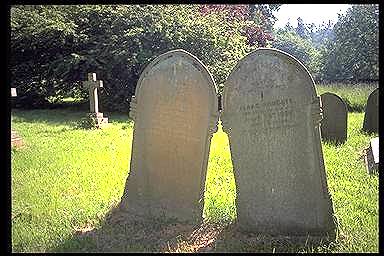 Isaac
and Charlotte Norgate, in Coltishall churchyard, still seem in love as their tombstones
settle closer over the years.
Isaac
and Charlotte Norgate, in Coltishall churchyard, still seem in love as their tombstones
settle closer over the years. 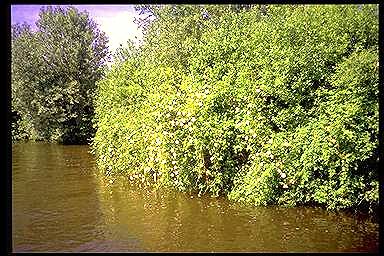 Cruising
along the narrow, slow-moving Ant river, with wild roses trailing down the banks,
was very relaxing. Max speed on the Broads waterways varied from 3 to 5 mph, which
meant no jet skis or fast outboards - a real treat.
Cruising
along the narrow, slow-moving Ant river, with wild roses trailing down the banks,
was very relaxing. Max speed on the Broads waterways varied from 3 to 5 mph, which
meant no jet skis or fast outboards - a real treat. 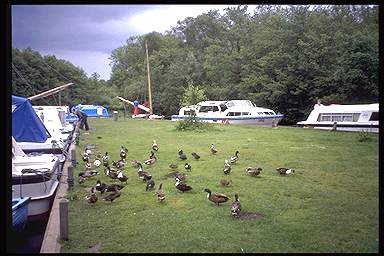 At
the staithe near Neatishead, where we were inundated by ducks and thunderstorms.
Our boat, with June, is on the extreme right.
At
the staithe near Neatishead, where we were inundated by ducks and thunderstorms.
Our boat, with June, is on the extreme right. 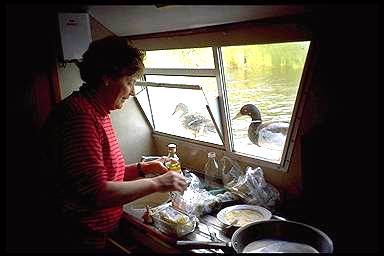 June
cooks, I look after the wine, and the ducks supervise - they often landed on the
boat even while underway. We tried a variety of English "ethnic" food: jellied
eels, cockles, fish and chips, fried herring milt on toast, fruit trifle and Dover
Sole, but only the last impressed the cook.
June
cooks, I look after the wine, and the ducks supervise - they often landed on the
boat even while underway. We tried a variety of English "ethnic" food: jellied
eels, cockles, fish and chips, fried herring milt on toast, fruit trifle and Dover
Sole, but only the last impressed the cook. 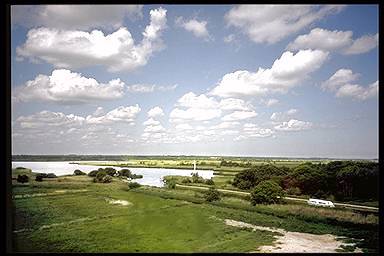 The
Broads are shallow lakes left by peat cutters of centuries past. This one is Horsey
Mere, with our floating home the Water Lobelia tied up in a quiet dike.
The
Broads are shallow lakes left by peat cutters of centuries past. This one is Horsey
Mere, with our floating home the Water Lobelia tied up in a quiet dike.
 The
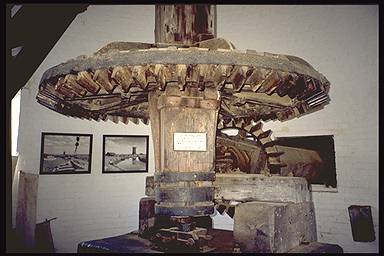
photo above was taken from the top of the old Horsey windmill (windpump is actually
the correct term), now preserved as an historic site. Using the most advanced
technology of their time, the making of these giant wooden gearwheels in the towers
was carried out by specialists.
The
photo above was taken from the top of the old Horsey windmill (windpump is actually
the correct term), now preserved as an historic site. Using the most advanced
technology of their time, the making of these giant wooden gearwheels in the towers
was carried out by specialists. 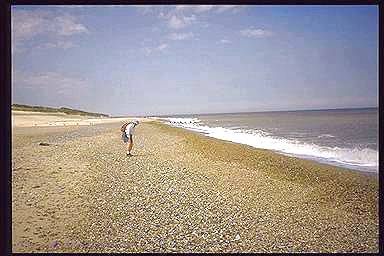 From
our moorings at Horsey, we walked a mile or so along quiet country lanes to this
deserted beach on the North Sea, where we spent time looking for some special
stones to take back to friends in Canada.
From
our moorings at Horsey, we walked a mile or so along quiet country lanes to this
deserted beach on the North Sea, where we spent time looking for some special
stones to take back to friends in Canada. 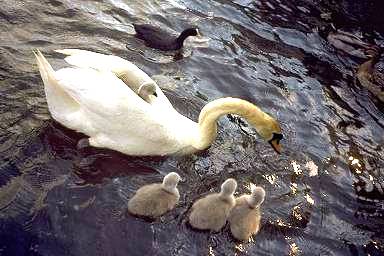 Ducks
and swans were everywhere on the Broads, most with very young chicks.
Ducks
and swans were everywhere on the Broads, most with very young chicks. 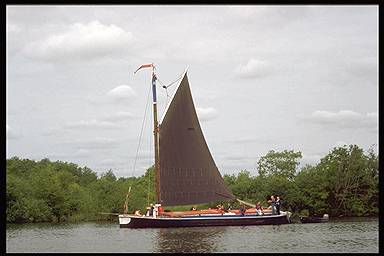 Sailing
wherries were once used for nearly all commerce on the Norfolk Broads. Most of
the few remaining are used for training kids, or chartered for slow and luxurious
cruising.
Sailing
wherries were once used for nearly all commerce on the Norfolk Broads. Most of
the few remaining are used for training kids, or chartered for slow and luxurious
cruising.  Over
the centuries, the level of the land and water in the Norfolk fens has changed
dramatically, as this post shows. 2000 years ago a Roman road ran where June is
standing, and that road was built over a much more ancient Bronze Age site.
Over
the centuries, the level of the land and water in the Norfolk fens has changed
dramatically, as this post shows. 2000 years ago a Roman road ran where June is
standing, and that road was built over a much more ancient Bronze Age site. 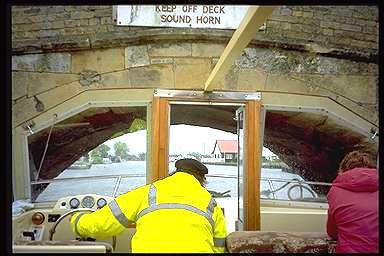 Medieval
Potter Heigham bridge is notorious, the lowest on the Broads. Its height and shape
dictate the design of the hundreds of boats that can just scrape through at low
tide. The bridge pilot (mandatory) took us through at high speed with just 1"
to spare as June watches anxiously.
Medieval
Potter Heigham bridge is notorious, the lowest on the Broads. Its height and shape
dictate the design of the hundreds of boats that can just scrape through at low
tide. The bridge pilot (mandatory) took us through at high speed with just 1"
to spare as June watches anxiously. 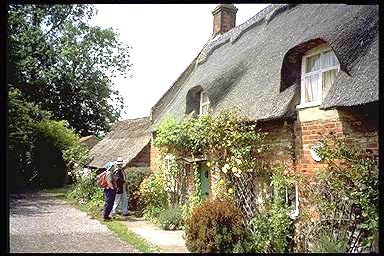 June
talking roses with the owner of a typical Norfolk thatched cottage.
June
talking roses with the owner of a typical Norfolk thatched cottage.  Norwich
cathedral, its 315' spire one of the highest in England.
Norwich
cathedral, its 315' spire one of the highest in England. 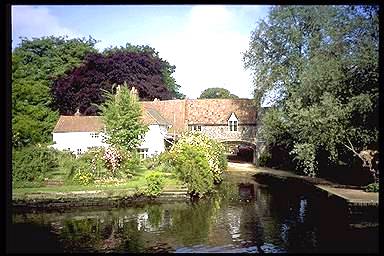 All
the stone for building Norwich cathedral - see the spire in the background - in
the 11th century came from Caen, France. Barged upriver from what is now the port
of Yarmouth, the stone went directly to the site using a hand-dug canal going
under the building in the centre.
All
the stone for building Norwich cathedral - see the spire in the background - in
the 11th century came from Caen, France. Barged upriver from what is now the port
of Yarmouth, the stone went directly to the site using a hand-dug canal going
under the building in the centre. 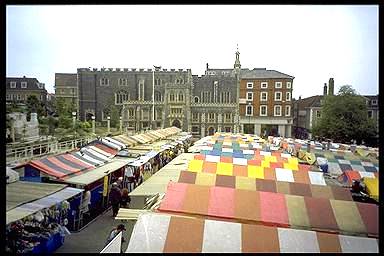 Open
weekly for about 1000 years, Norwich market is a great place to look for all kinds
of bargains, crafts, food and flowers.
Open
weekly for about 1000 years, Norwich market is a great place to look for all kinds
of bargains, crafts, food and flowers. 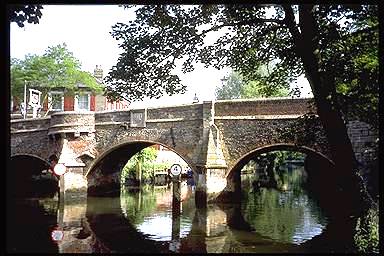 The
bridge June is standing on in Norwich is said to be the oldest bridge in England
still in use. In contrast, we had a our only poor meal of the trip at the pub
in the background, amid a smoky crowd of soccer fans watching the World Cup.
The
bridge June is standing on in Norwich is said to be the oldest bridge in England
still in use. In contrast, we had a our only poor meal of the trip at the pub
in the background, amid a smoky crowd of soccer fans watching the World Cup. 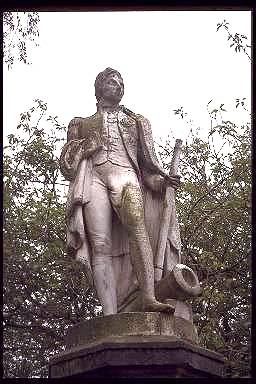 This
well endowed statue of Admiral Lord Nelson, hero of Trafalgar, stands near Norwich
cathedral.
This
well endowed statue of Admiral Lord Nelson, hero of Trafalgar, stands near Norwich
cathedral. 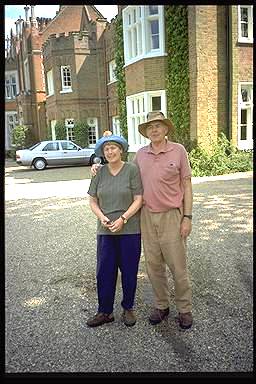 South
Walsham Hall, ex-home of Lord Fairhaven, where we had a gourmet lunch and met
Richard, an author and retired royal photographer. He took this photo of June
and myself and then, with his friend, drove us on a mini-tour of the nearby village
and church.
South
Walsham Hall, ex-home of Lord Fairhaven, where we had a gourmet lunch and met
Richard, an author and retired royal photographer. He took this photo of June
and myself and then, with his friend, drove us on a mini-tour of the nearby village
and church. 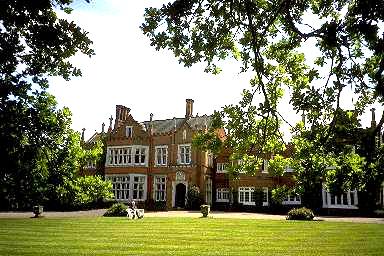 ...then
I took this one of him relaxing on the lawn.
...then
I took this one of him relaxing on the lawn. 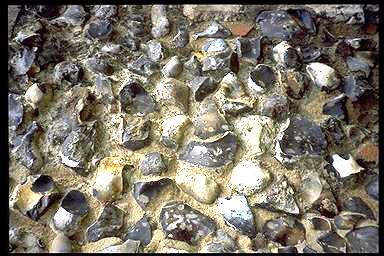 Like
many others, this 9th. century church wall at Horsey is built of flint set in
mortar. Once the only stone readily available to Norfolk builders, flint is everywhere:
in walls and fields, roadsides and beaches. The exact mechanism of its formation
in sedimentary rock is still uncertain.
Like
many others, this 9th. century church wall at Horsey is built of flint set in
mortar. Once the only stone readily available to Norfolk builders, flint is everywhere:
in walls and fields, roadsides and beaches. The exact mechanism of its formation
in sedimentary rock is still uncertain.  Corkscrews of stone, stairs twist up inside the walls of churches. Most are a
tight fit even for a lean priest, but this one in Norwich cathedral was more spacious,
possibly designed for senior dignitaries.
Corkscrews of stone, stairs twist up inside the walls of churches. Most are a
tight fit even for a lean priest, but this one in Norwich cathedral was more spacious,
possibly designed for senior dignitaries. 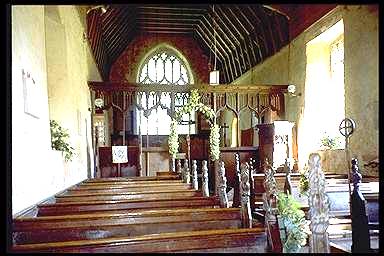 This
homely little church, sheltered in the lonely hamlet of Horsey on the Norfolk
coast behind sand dunes and dikes, is older than many great cathedrals. Inside
its thick walls, the quiet of ten centuries was welcome after a hot walk on the
beach.
This
homely little church, sheltered in the lonely hamlet of Horsey on the Norfolk
coast behind sand dunes and dikes, is older than many great cathedrals. Inside
its thick walls, the quiet of ten centuries was welcome after a hot walk on the
beach. 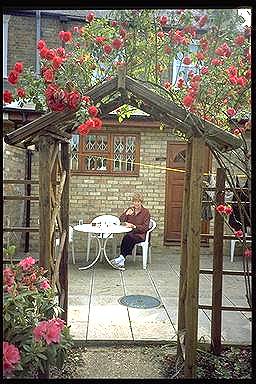 The
self-catering house we rented in Ely suited us perfectly. Its shady, secluded
back garden was ideal for relaxing with wine and cheese in the evening after a
busy day exploring.
The
self-catering house we rented in Ely suited us perfectly. Its shady, secluded
back garden was ideal for relaxing with wine and cheese in the evening after a
busy day exploring. 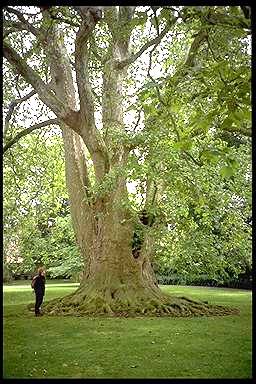 We
found this magnificent plane tree in the grounds of a hospice in Ely. It is said
to be the biggest and oldest in all of England.
We
found this magnificent plane tree in the grounds of a hospice in Ely. It is said
to be the biggest and oldest in all of England. 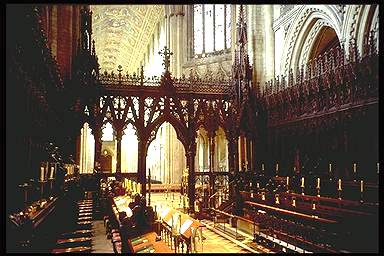 Ely
cathedral is literally awe inspiring from any viewpoint. This was taken from the
choir stalls, where one wet evening, although not religious, we were part of a
congregation of just a dozen who attended Evensong. With so few people, they sat
us here with the choir - a memorable experience.
Ely
cathedral is literally awe inspiring from any viewpoint. This was taken from the
choir stalls, where one wet evening, although not religious, we were part of a
congregation of just a dozen who attended Evensong. With so few people, they sat
us here with the choir - a memorable experience. 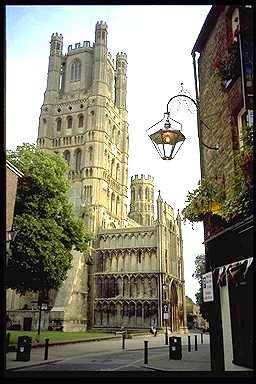 The
cathedral dominates almost every aspect of Ely as it stands on an island-like
hill surrounded by miles of flat Fen countryside at or even below sea level.
The
cathedral dominates almost every aspect of Ely as it stands on an island-like
hill surrounded by miles of flat Fen countryside at or even below sea level. 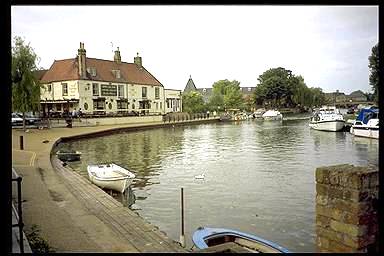 The
riverfront at Ely, with its pubs, restaurants, antique shops, and ever-changing
boat and waterfowl population.
The
riverfront at Ely, with its pubs, restaurants, antique shops, and ever-changing
boat and waterfowl population. 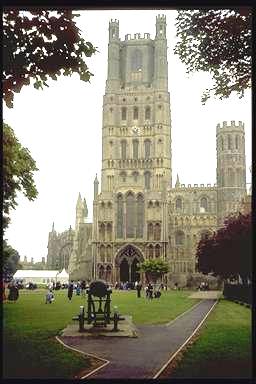 One
weekend, we found Ely streets full of gowned graduates strolling with proud, well
dressed parents taking photos. Just a few centuries ago, witches were burnt at
the stake on these same cathedral grounds.
One
weekend, we found Ely streets full of gowned graduates strolling with proud, well
dressed parents taking photos. Just a few centuries ago, witches were burnt at
the stake on these same cathedral grounds. 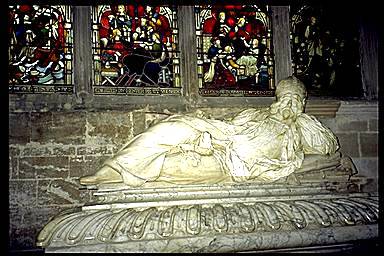 This
Bishop of Ely must have been a cool dude, judging by his tomb. Wish we had found
out the story behind this unusual pose.
This
Bishop of Ely must have been a cool dude, judging by his tomb. Wish we had found
out the story behind this unusual pose. 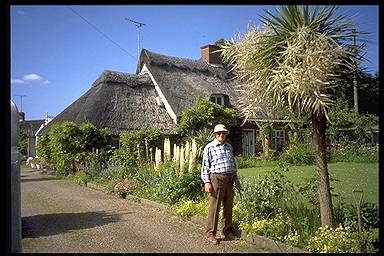 We
met friendly, interesting people everywhere. This gentleman, ninety years young,
had built an 18' stone wine cellar in his exotic waterfront garden, stocked with
home made wine. After showing us round his cottage full of antiques, he explained
that he owed his health to herbal remedies and vitamins. He regretted that his
"French girl friend" was not at home to meet us!
We
met friendly, interesting people everywhere. This gentleman, ninety years young,
had built an 18' stone wine cellar in his exotic waterfront garden, stocked with
home made wine. After showing us round his cottage full of antiques, he explained
that he owed his health to herbal remedies and vitamins. He regretted that his
"French girl friend" was not at home to meet us! 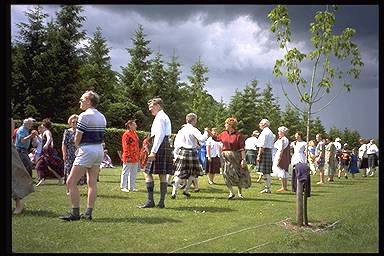 Scottish
Country Dancing on the vast East Lawn of Anglesey Abbey with the Cambridge locals,
was a much anticipated highlight of the trip for June. Amazingly, the rain held
off - just - for the whole afternoon.
Scottish
Country Dancing on the vast East Lawn of Anglesey Abbey with the Cambridge locals,
was a much anticipated highlight of the trip for June. Amazingly, the rain held
off - just - for the whole afternoon. 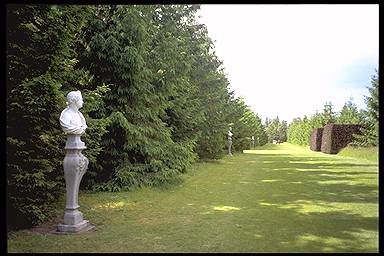 While
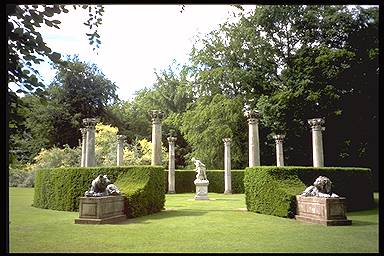
June danced, I walked miles exploring the grounds of Anglesey Abbey. Despite its
name, it's not in Wales. Fine statues were everywhere, each carefully placed for
best effect. A beautiful example of a grand English garden - and a photographer's
delight.
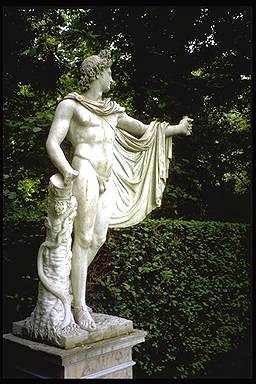
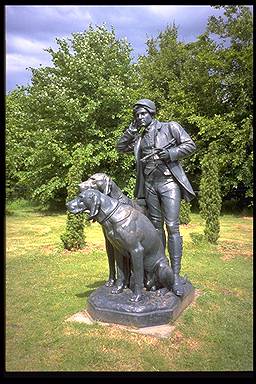
While
June danced, I walked miles exploring the grounds of Anglesey Abbey. Despite its
name, it's not in Wales. Fine statues were everywhere, each carefully placed for
best effect. A beautiful example of a grand English garden - and a photographer's
delight. 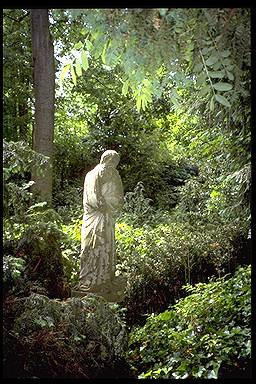
 See above...
 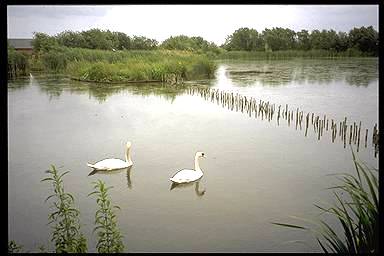 Flag Fen is said to be one of the most archaeologically exciting Bronze Age sites
in Europe. It's well off the main tourist track and we met few in England who
had ever heard of it. This small scale replica of the original huge wooden platform
and access causeways gives a hint of the original layout. The purpose of the extraordinary
structure is still unclear, but it was probably ceremonial.
Flag Fen is said to be one of the most archaeologically exciting Bronze Age sites
in Europe. It's well off the main tourist track and we met few in England who
had ever heard of it. This small scale replica of the original huge wooden platform
and access causeways gives a hint of the original layout. The purpose of the extraordinary
structure is still unclear, but it was probably ceremonial. 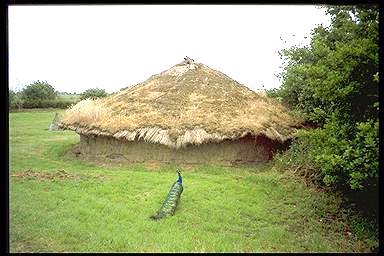 A
replica of a Bronze Age dwelling that once stood on this site at Flag Fen. Note
the peacock strutting by.
A
replica of a Bronze Age dwelling that once stood on this site at Flag Fen. Note
the peacock strutting by. 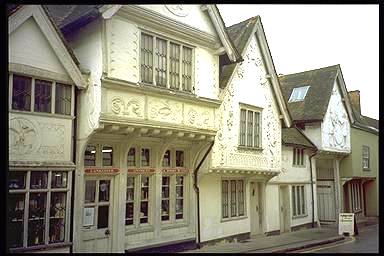 Many
of the medieval buildings in the centre of Saffron Walden, near Cambridge, have
survived almost unchanged, like these from the 15th. century with elaborate plaster
work illustrating a local legend.
Many
of the medieval buildings in the centre of Saffron Walden, near Cambridge, have
survived almost unchanged, like these from the 15th. century with elaborate plaster
work illustrating a local legend. 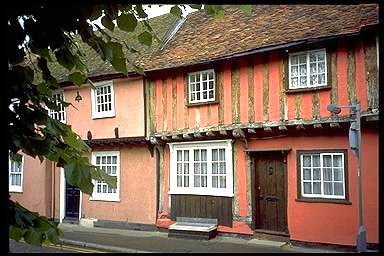 More
medieval survivors...
More
medieval survivors... 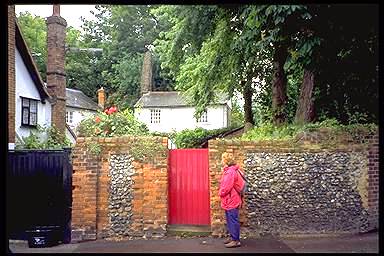 A
quiet lane in the heart of Saffron Walden. The walls, like many in this area,
were originally built of flint and mortar, then altered, patched and rebuilt many
times over the centuries.
A
quiet lane in the heart of Saffron Walden. The walls, like many in this area,
were originally built of flint and mortar, then altered, patched and rebuilt many
times over the centuries. 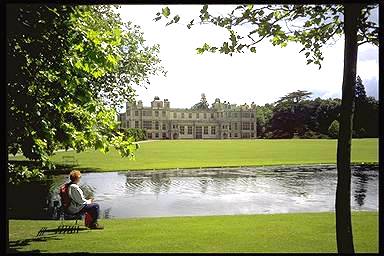 This
stately home, Audley End, was the only one we had time to visit. This is just
a small part of the original building which once extended down to the lake, enclosing
a huge courtyard.
This
stately home, Audley End, was the only one we had time to visit. This is just
a small part of the original building which once extended down to the lake, enclosing
a huge courtyard. 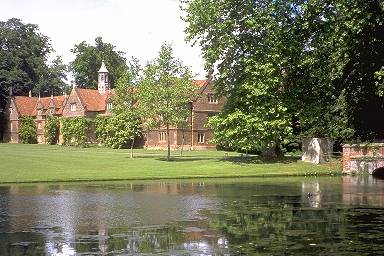 No,
this isn't another grand country house - just the stables at Audley End.
No,
this isn't another grand country house - just the stables at Audley End. 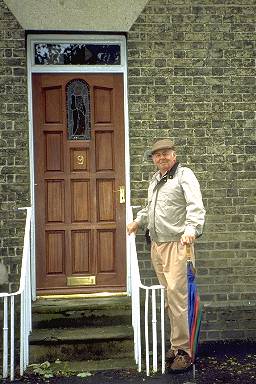 Outside
our rented house in Ely the day before leaving, I'm showing off the only purchase
I brought back to Canada - a typical English woolly cap, or "flat 'at" as it's
sometimes called. The striped umbrella came with the house.
Outside
our rented house in Ely the day before leaving, I'm showing off the only purchase
I brought back to Canada - a typical English woolly cap, or "flat 'at" as it's
sometimes called. The striped umbrella came with the house. 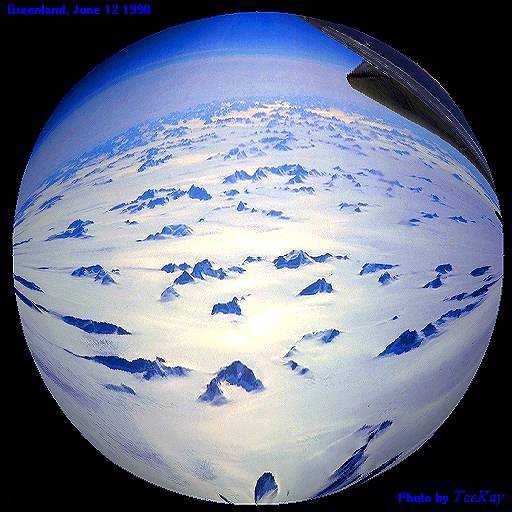 At
the end of a wonderful trip, six miles high over Greenland on the flight back
to Vancouver, the air was crystal clear.
At
the end of a wonderful trip, six miles high over Greenland on the flight back
to Vancouver, the air was crystal clear. 